All About Kenbishi Brewery
“Kenbishi is Kenbishi”
We heard that phrase a few times on the tour, and it perfectly sums up Kenbishi’s philosophy as a brewery. They are wholly dedicated to preserving historical brewing techniques and maintaining their own identity, no matter the costs. Whereas most people think that the phrase “a broken clock is right twice a day” as an insult, they embrace it. In their mind, if they chase modern trends, they will always lag behind. Instead, as long as they stick to their ideals, the trends may come back around to the style of sake they embody.
Preserving Historical Techniques
Kenbishi was founded in 1505 and has been making sake using many of the same techniques for 220 years. In fact, when asking about their moto method, they indicated that their method pre-dated what is now characterized as yamahai (1909) or kimoto (1687). As a result, they have a wholly unique process that hasn’t been widely published or shared with other breweries. When pestered for more information, they mentioned it was similar to kimoto but with some important (secret) differences.
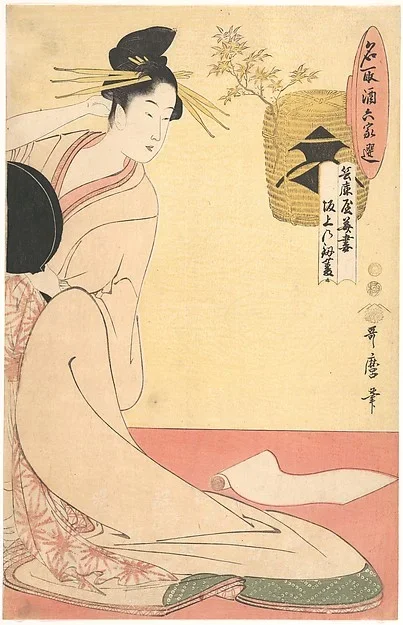
Kenbishi’s logo featured in ukiyo-e prints from the Edo period (1601-1868)
Despite this claim, there were some clear signs of modernization: they used enamel-lined tanks, a yabuta for pressing, and a few other more modern pieces of technology. However, they have maintained generally the same techniques, ingredients, and methods from the late 1700s and that core preservation ethos was definitely evident. A couple of extreme examples of this stood out on my tour: a cooperage and straw rope making
Cooperage
In 2017, faced with a lack of craftsmen to maintain their wooden tools and equipment, Kenbishi created an entire woodcrafting shop in-house. There is currently only one shop left in Japan making traditional kioke (wooden fermentation vessels), and most wood artisans working with old sake tools are dying out. Instead of transitioning to metal tools, Kenbishi decided to bring the entire operation in house.
They have one full-time woodworker, along with other part-time workers. When we visited, a worker was splitting bamboo into threads to create the rope that binds kioke, dake, and other wooden vessels.
However, then they faced a lack of raw ingredients - they couldn’t source bamboo long enough to be turned into the braided rope that binds the dake and koshiki. As a result, they ended up purchasing an entire bamboo forest to allow the bamboo to grow to the necessary height before harvest.
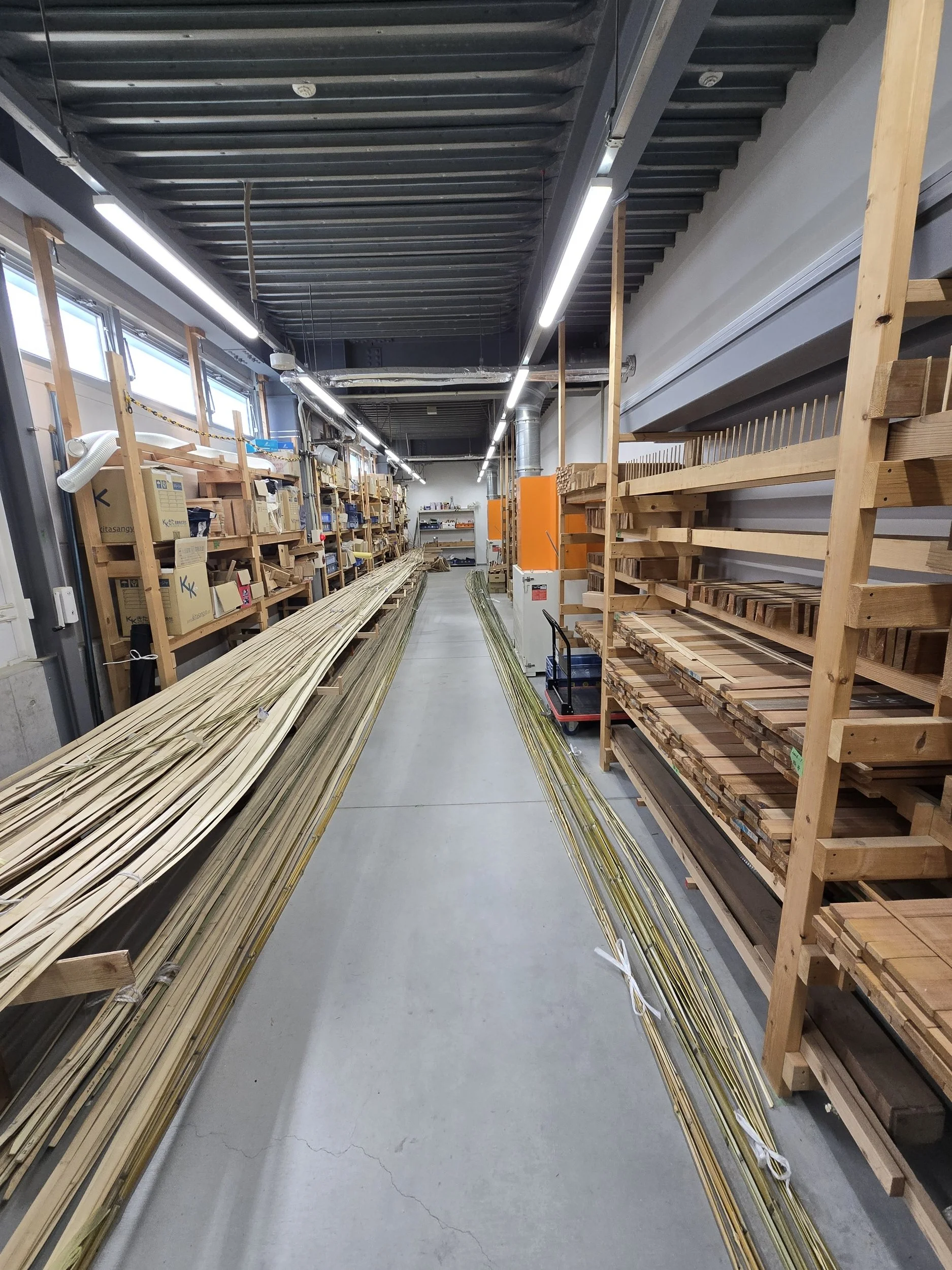
Kenbishi’s woodworking shop. The long strands are hand-shaved from bamboo to make rope to bind wooden vessels.
Straw Ropes
Most people are familiar with sakedaru - the decorative cedar barrels used to transport sake. They’re typically wrapped in straw mats and tied with straw rope.
Most breweries have begun switching to plastic fiber ropes for two reasons - the producers are dying off, and its much cheaper. As a result, Kenbishi bought a couple very expensive, broken down machines from one of the producers exiting the business. They then had to learn how to fix and operate the machine themselves, all because they refused to let this traditional technique fade away.
I found it striking that this has no effect on the sake. The finished sake would be the exact same quality if the ropes were made of plastic, but they decided to commit serious money and resources towards this anyway.
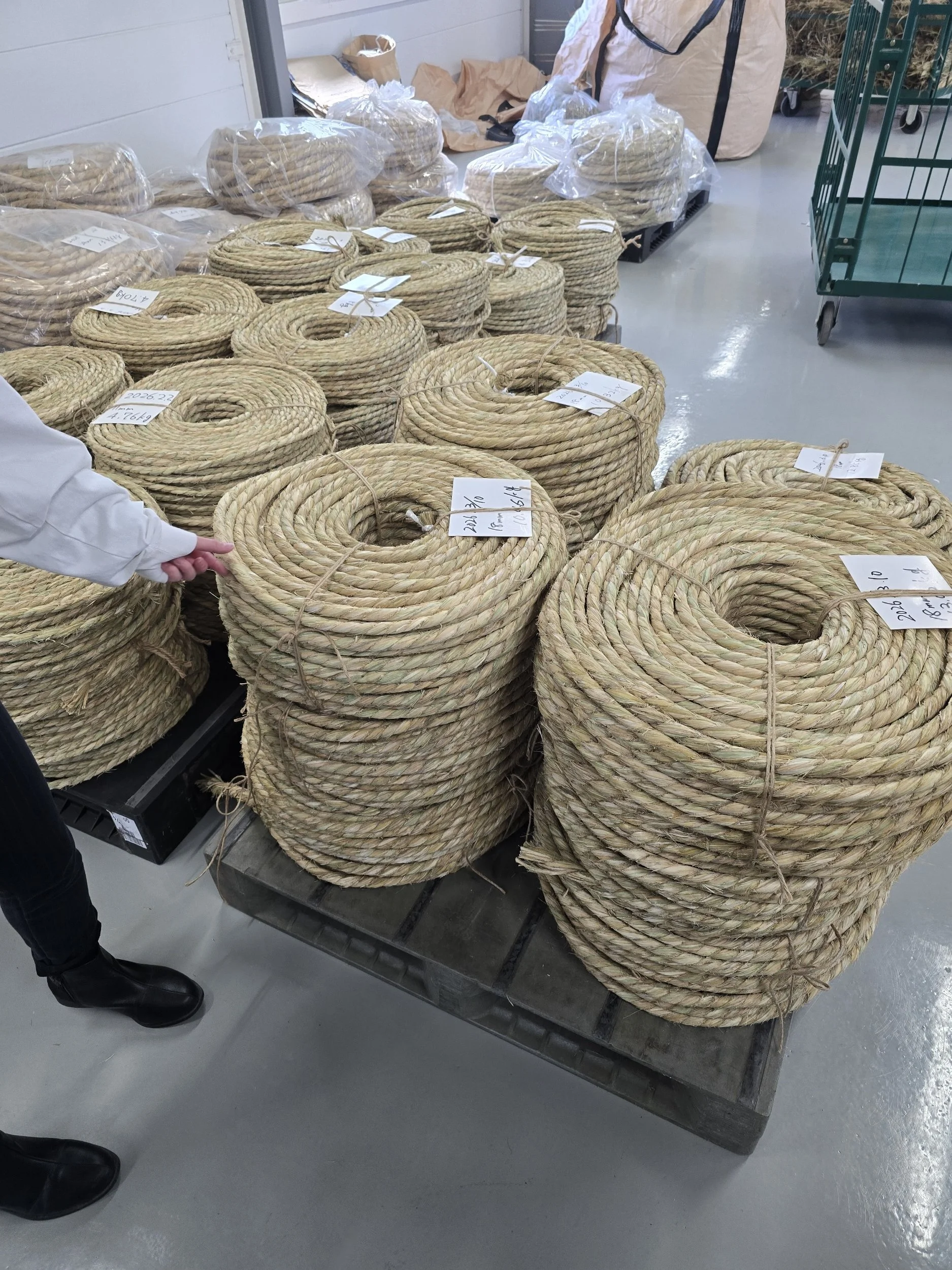
Straw ropes made the traditional way, for use to wrap their sake barrels.
I’ve seen many traditional, old-school breweries. However, Kenbishi stands out due to its size. They produce 10,000 koku of sake each year. However, whereas most breweries on this scale rely on technology and modernization, Kenbishi does not. To use these manual, labor-intensive techniques on such a large scale was fascinating.
As a result, they need to hire around 100 kurabito every year during their seasonal brewing schedule, the largest number in all of Japan. These seasonal workers eat and sleep at the brewery, which is equipped with dormitories for them.
Rice
Kenbishi primarily uses Toku A Yamadanishiki from Hyogo, where they’re located. Due to their large size, they can maintain huge contracts with local farmers to ensure they keep their access to this highly prized rice at affordable rates. They also have some of their own rice fields as well to further ensure their rice supply, currently owning 18 rice fields for Yamadanishiki and another 2 for Aiyama rice.
Rice quality changes every year due to weather and demand. Kenbishi uses a few techniques to alter their brewing based on the changes in the rice every year:
First, you may have noticed that Kenbishi does not include the seimaibuai (rice polishing rate) on their labels. This is because every year they choose their seimaibuai based on rice quality. If they feel that the rice has an above-average amount of protein, they’ll polish slightly more. If it’s lacking protein, they’ll polish less.
Second, Kenbishi, like most breweries, will adjust their brewing techniques and koji growth to account for changes in the rice. If the rice is particularly dry, they will soak it for longer before steaming. If it has less starch, they may maximize koji-enzymes in order to ensure full conversion of what remains. There are countless choices the toji will make every year to account for differences in the rice harvest.
Lastly, Kenbishi prioritizes blending different tanks of sake for every release. Despite recent marketing by some brands, blending is not a new phenomenon in the sake world - Kenbishi and others have been doing it for hundreds of years. In Kenbishi’s case, they blend primarily to ensure consitency across every sake release. Because each batch will inevitably taste different, they can blend batches with different qualities to create one consistent product every year.
Aside from that, Kenbishi also polishes their own rice, which is not very common in the sake brewing world. They own 10 rice polishers - a huge number - in order to control their own polishing rate and keep everything in-house.
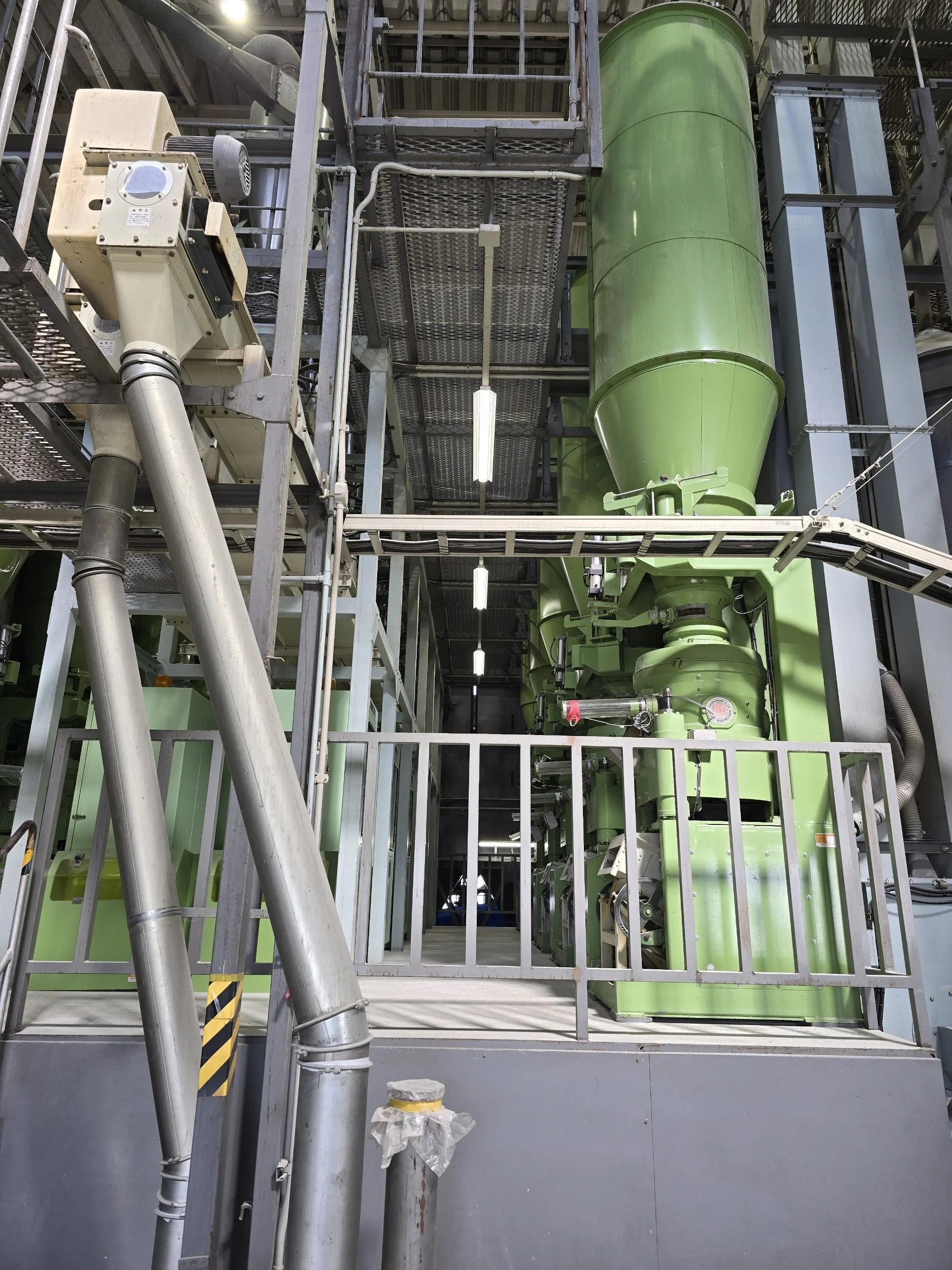
Rice polishers at Kenbishi
Brewing
Whereas most breweries have transitioned to using a metal koshiki (rice steamer), Kenbishi, once again, continues to use the more traditional wooden koshiki. This massive wooden vat requires constant maintenance from their woodshop and has to be completely replaced every 10 years due to the wear and tear on the wood. Their particular koshiki can steam up to 1,500kg per batch.
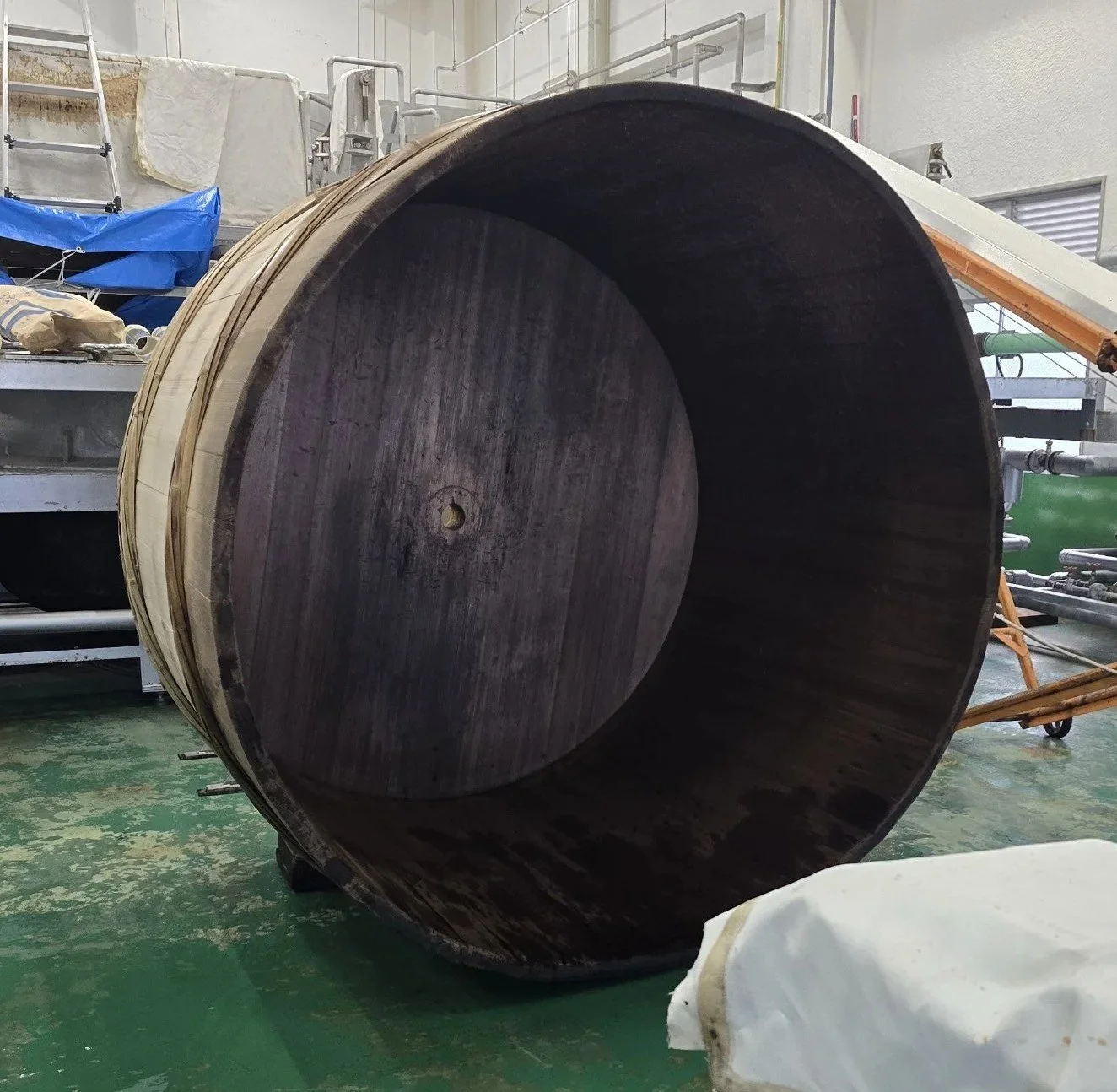
The wooden koshiki, or rice steamer, that can steam up to 1,500kg of rice at once
This traditional approach inherently steams the rice unevenly - the rice at the bottom receives more heat and moisture than the top. Many breweries have begun to transition to more modern techniques to steam the rice more evenly. However, Kenbishi embraces the “imperfections” of this approach, preferring that some of their rice is more heavily steamed (to melt faster in the moromi) while the drier portions are used for koji making. Once again, Kenbishi is not unique in using different parts of the koshiki batch in different parts of the sake brewing process, but it reinforces their commitment to using historical techniques even when more “optimal” options are available.
Fermentation
Kenbishi ferments their sake for much longer than most other breweries. They ferment their moto (starter) for 45 days. In comparison, the other “long-aged” starter methods (yamahai and kimoto) are about 30 days and the fast method (sokujo) is around 15 days. According to their toji, this both amplifies the complexity of the moto but also increases the vitality of their yeast. This is most likely a reason their sake ferments up to around 23-24% ABV instead of the typical 18-20%.
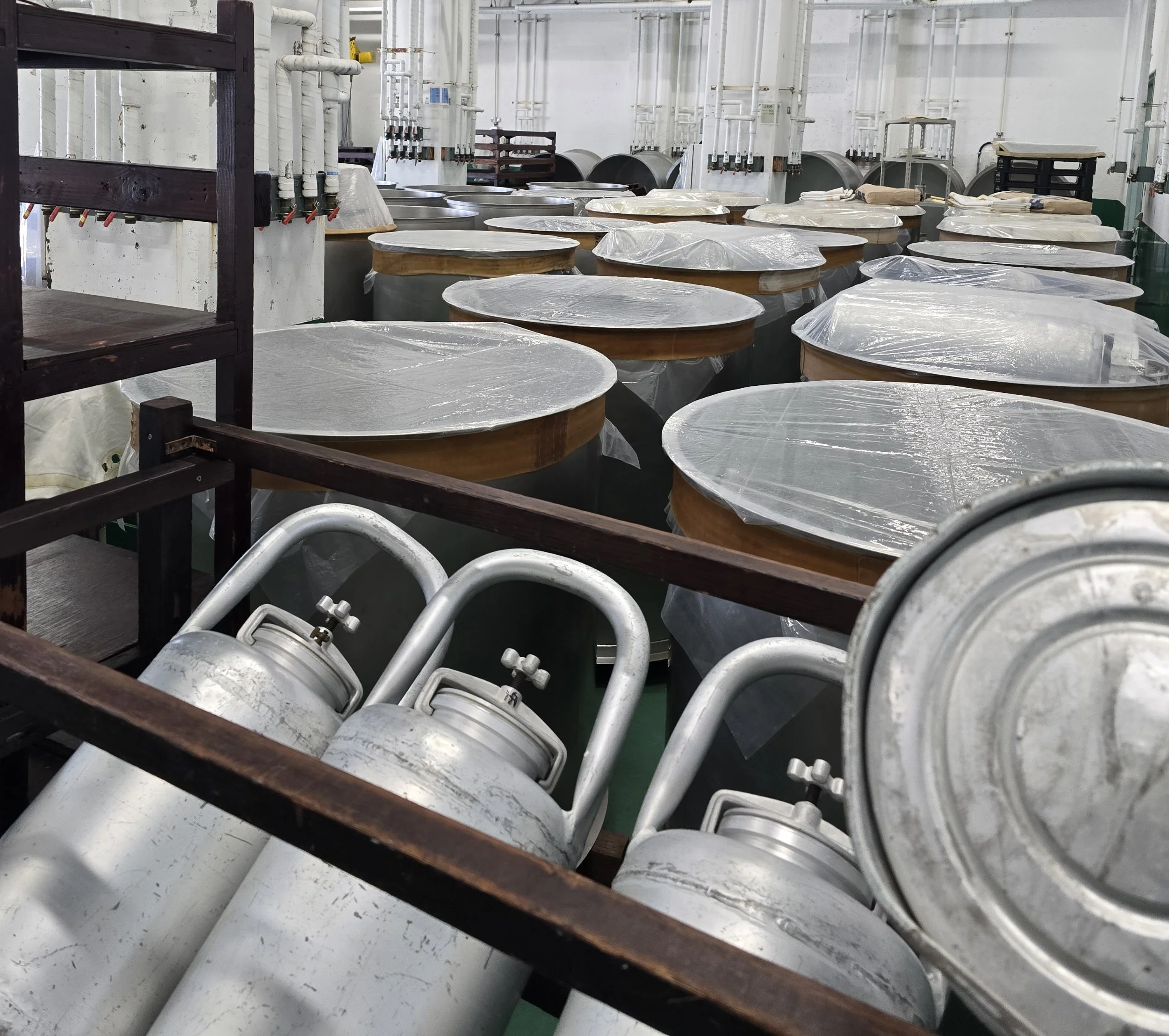
Tanks for the moto, or starter
Interestingly, they ferment the moromi (mash) for 30 days. Most junmai-style sake ferments for about 15 days, while the slower, colder 30 day fermentation period is typically used for ginjo-style sake. However, Kenbishi does not ferment at very cold temperatures like a ginjo-style sake would. Therefore, the 30 day room-temperature fermentation results in a much drier, fully-fermented sake that can hold up to the extended aging that they perform.
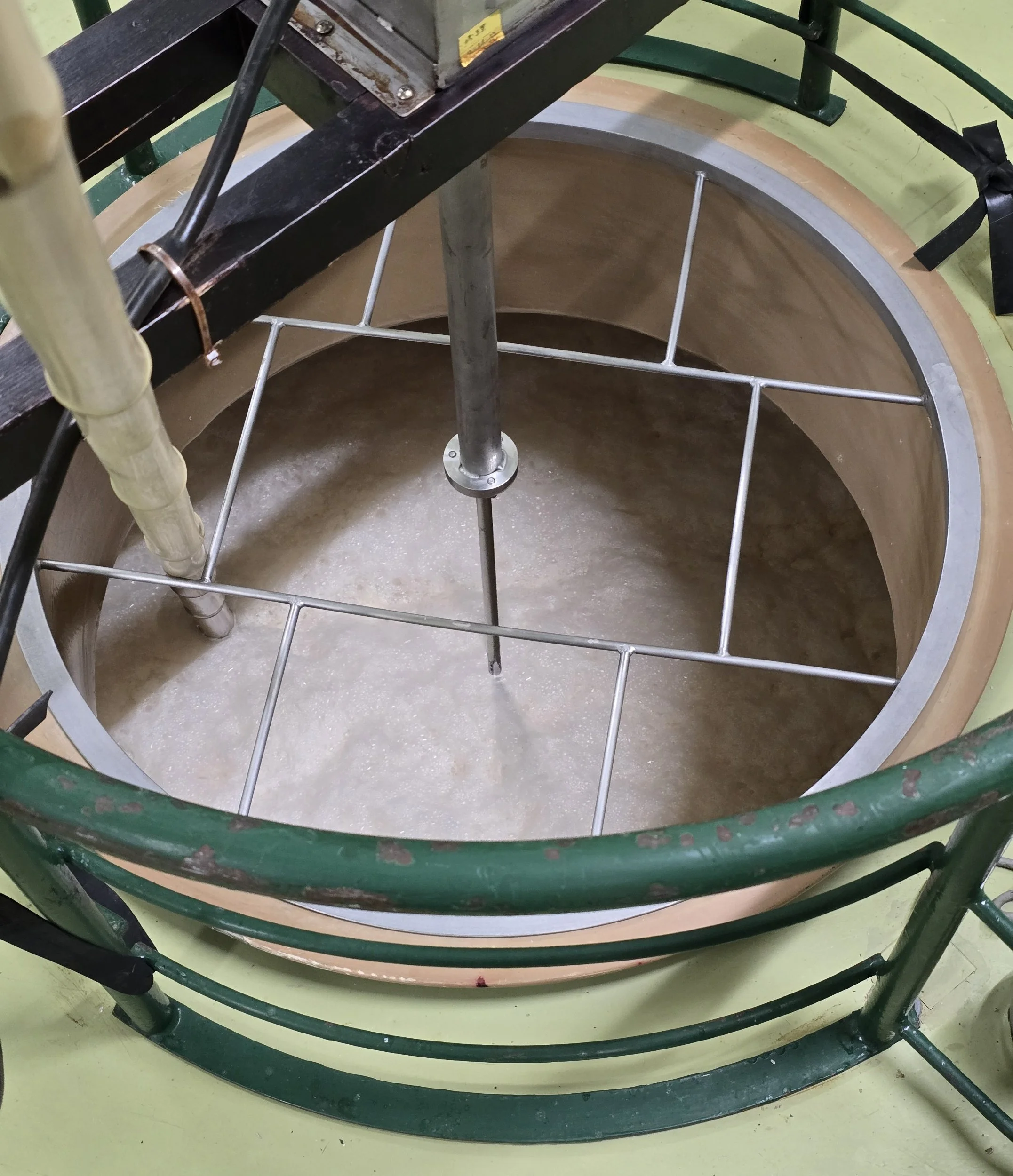
Moromi 7 days into fermentation
For temperature control, Kenbishi uses dake, or sealed buckets that they fill with either cold or hot water. They are then added to the fermenting sake in order to raise or lower the temperature as needed. To warm the sake, Kenbishi uses wooden dake, preferring the traditional vessel as a means of gradually and gently warming the sake. However, in a bit of innovation, they were using stainless steel dake for cooling purposes. When asked, they mentioned that they wanted the quicker temperature exchange of a steel dake over a wooden one when cooling.
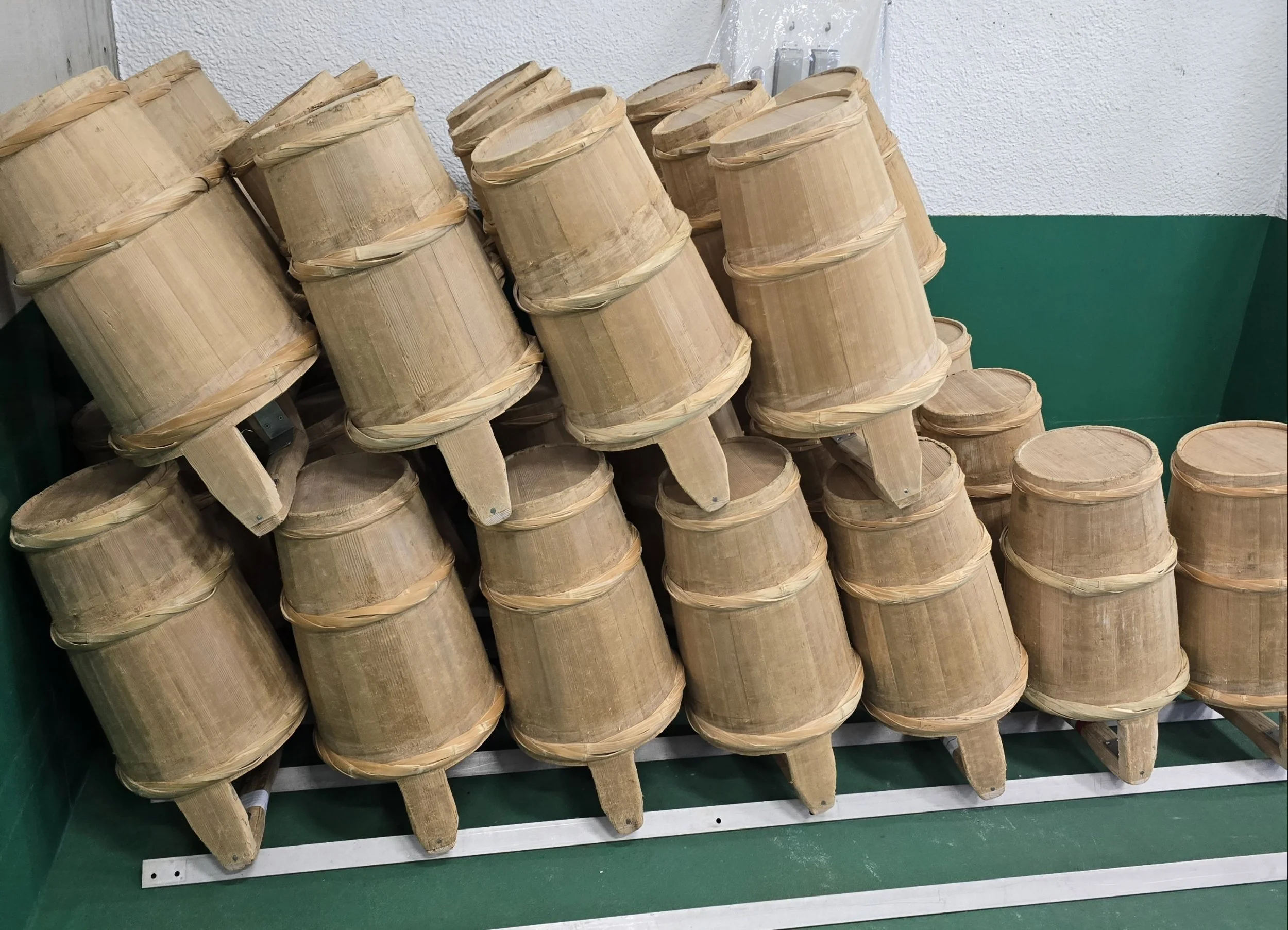
Wooden dake used by Kenbishi to gently warm the fermenting sake
Using yet another historical technique, Kenbishi does not add yeast directly to the sake. Instead, they rely on the yeast that has already inoculated the walls and atmosphere of the brewery. The drawback of this method means that they are reliant on the whims of the yeast mutations that occur and have to use the same yeast for all their sake, but for a place like Kenbishi, that is irrelevant.
One last interesting note is that their junmai sake and honjozo sake are brewed identically aside from the jozo (alcohol) addition. They do not brew a separate type of sake that they plan to add the jozo addition to, but instead differentiate them in any ways such as aging period and rice varietals.
Koji
Due to its size, Kenbishi has 4 separate koji rooms to grow their koji. However, they only use 2 every year, alternating each year. They believe the koji room benefits from “airing out” and resetting its microbial biome every year, ensuring that no bacteria continues to thrive due to continued use.
Kenbishi also uses small trays (koji-buta) to grow their koji (a method called futa-koji), as opposed to large trays, entire tables, or machines. This method provides better control over the koji, as individual trays get shuffled around to maximize airflow and temperature. If one tray is particularly hot or growing too fast, they can rearrange it to cool it down and slow its growth.
That control comes at a cost, as this method is extremely labor intensive - it requires kurabito to manage every single tray individually instead of one large table. They have to constantly shuffle the trays between the top rows and the bottom ones to maintain temperature equilibrium as much as possible.
That being said, I’ve only seen small breweries use this technique. I don’t know of any brewery this size using futa-koji, and I believe Kenbishi is the only one. Usually scaling up requires sacrifices at some points in the process, but Kenbishi refuses to compromise on this aspect of their sake brewing.
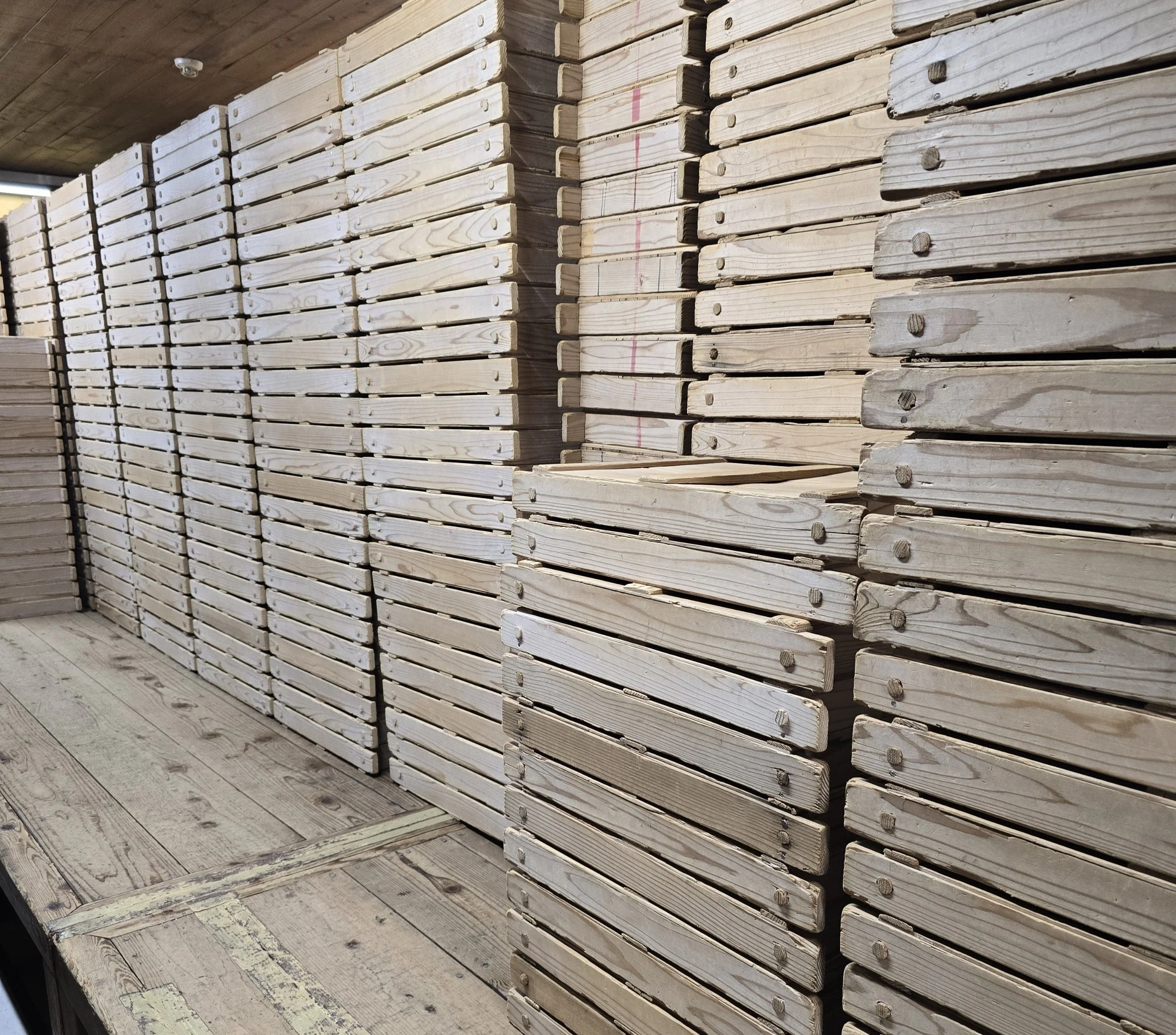
“Koji-buta”, or cedar trays used to make koji. Kurabito shuffle these around to maintain a constant temperature and growth.
Otherwise, Kenbishi is also fairly unique by growing their koji for a full 70 hours and do not use temperature or humidity control at all. Most breweries grow their koji over 48-60 hours, but Kenbishi prolongs the growth of their koji to maximize enzyme production. This also shows why futa-koji is so essential to Kenbishi, as otherwise they have no way of managing the temperature of humidity of the koji growth. Without trays to shuffle, a single huge table of koji could get too hot or humid and they'd have no way of correcting the mistake. All of these techniques combine to be essential to their dry, intense, full-bodied sake.
Aging
Kenbishi ages all of their sake before release. The youngest sake that they release is 1 year old, while the oldest is about 20 years. This is all done in 389 massive enamel-lined tanks, with the only temperature control being slight refrigeration in the summer.
The aging process contributes many things to Kenbishi’s final product - it mellows the relatively high ABV, contributes umami and richness through the maillard reaction, and has a slight oxidative effect to add some toasty flavors. Having tasted Kenbishi’s sake fresh from the press - which tasted very different from their regular releases - aging their sake is essential to their typical flavor profile.
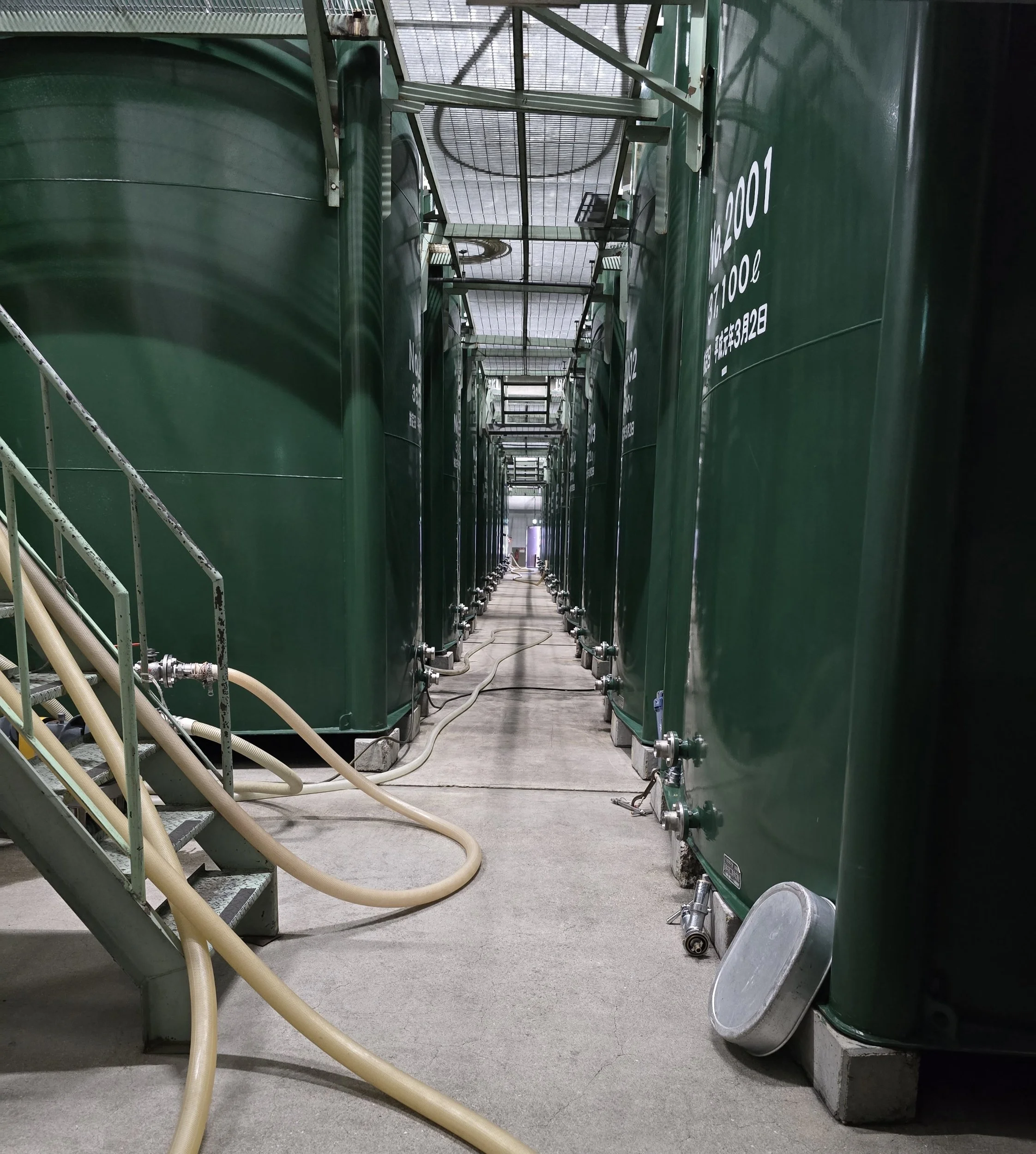
One view of Kenbishi’s 389 aging tanks
Blending
Kenbishi then takes their vast stores of aged sake - all 389 tanks worth - and decides which to blend together each time they release their sake. Aside from various lengths of aging, each batch will taste different due to the inherent randomness of sake brewing, rice quality, and many other factors.
For their flagship, Kuromatsu Honjozo, they select sakes from 1-5 years old. Mizuho Junmai is 2-8 years old, and Zuishou is 5-20 years old. By using different ages and blending techniques, they can differentiate their flagship products between each other.
For Kenbishi, the goal of blending is to provide a consistent product every release. They want Kuromatsu to always taste like Kuromatsu has tasted. They don’t want some “vintages” being better than others, or for their house profile to drift slowly over time.
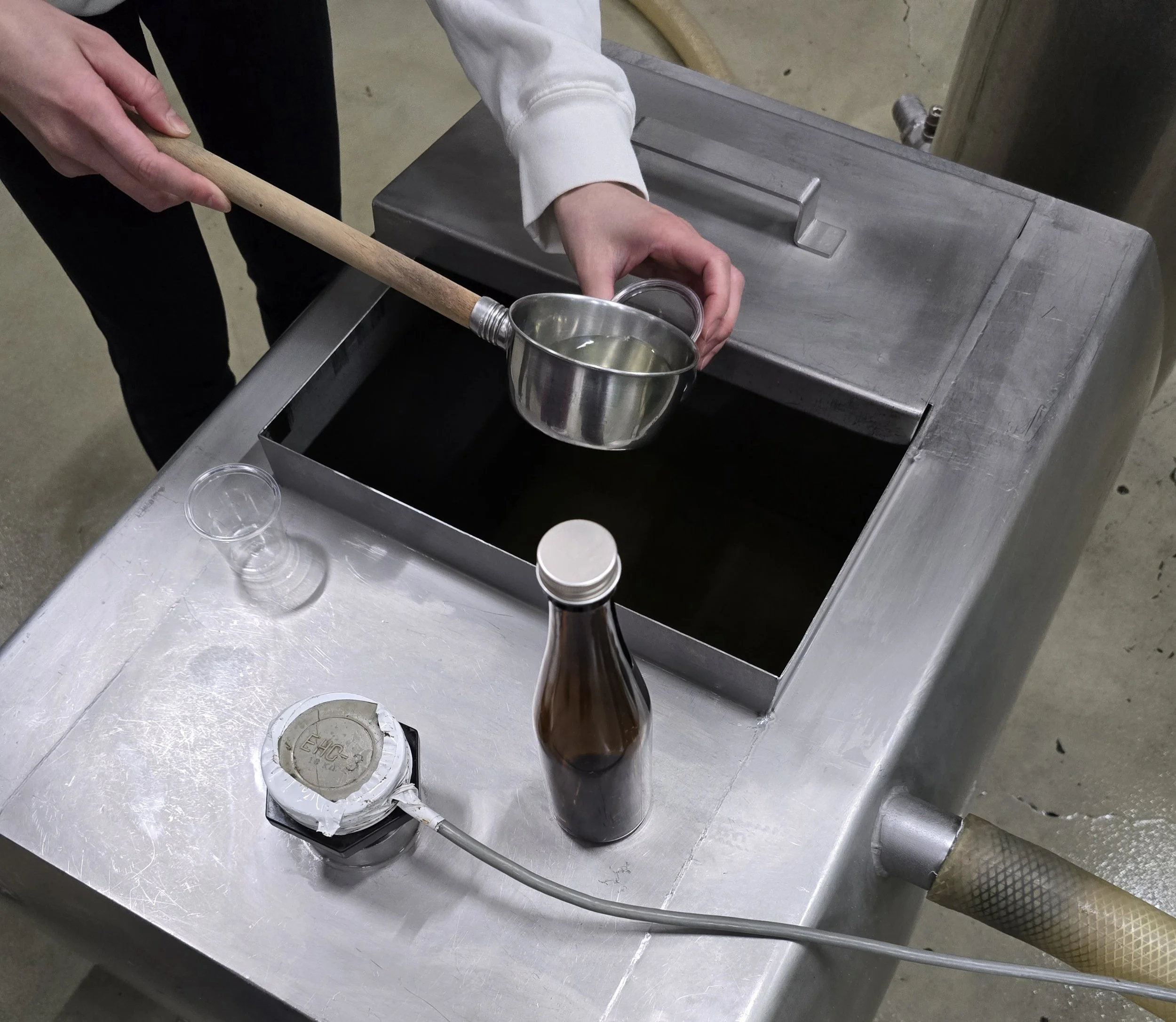
Tasting Kenbishi straight from the press
As part of the tour, we were able to taste sake fresh from the press - unpasteurized and undiluted. While most breweries produce genshu at about 18-20%, Kenbishi’s is around 23%. Legally, they wouldn’t even be able to sell their genshu as seishu in Japan, as the maximum limit is 22%.
Their genshu was amazing to me - incredibly intense, rich, and umami-filled. However, it had a bold freshness associated with more modern namazake, layering with their typical umami profile for a complex and interesting sake. I loved it, which prompted me to ask why they don’t bottle this (even diluted to 22%). I’d love to be able to buy their nama genshu, or even special “single cask” releases of exceptional vats at particular ages.
And that’s when I heard the response - “Kenbishi is Kenbishi.” There was nothing more beyond that. It wasn’t on-profile to bottle such a fresh genshu or do special selections. Their core ethos is about traditional sakes, aging, and blending, so anything that wasn’t part of that is a non-starter, even if the demand is there.
Personally, I’d love to see some unique expressions of blending, or “single tank” releases to highlight the differences between batches instead of hide them. For sake nerds, it would be fascinating to taste a single-tank Kenbishi at 15 years old and see how it compares to their blended versions. But for Kenbishi, staying true to their brand and their core releases is at the heart of their ethos. “Kenbishi is Kenbishi” after all. And I love that they stick to it.
The Decline of Traditional Sake
It’s no secret that sake’s popularity is declining in Japan. Current consumption is around a quarter of its peak and now only accounts for about 5% of the alcohol market in Japan.
Kenbishi is particularly susceptible to this decline due to their emphasis on historical brewing traditions. The more “trendy” styles that are gaining popularity are light, fruity, and low ABV - a stark contrast to Kenbishi’s sake. Throughout the tour, we heard many comments referencing that no one drinks sake anymore, especially room temperature or hot sake, at which Kenbishi particularly excels.
As a result, Kenbishi has gone from a peak of 8 separate breweries to only 3 now. They are currently producing 10,000 koku every year, but that number is decreasing every year. As a tiny sliver of hope, their exports have increased about 2% every year, but that is no where near large enough to make up for the domestic losses.
It amazed me that Kenbishi’s sales are steadily declining and yet they still retain their commitment to historical sake production. Further, they increased their investment even more with the purchasing of very expensive straw rope machines, creating a woodworking shop, and more.
However, with maybe the only bit of modernization I saw throughout the entire tour, Kenbishi recently designed a new shape for their one-cup sake, specifically to be heated in the microwave. In line with their emphasis on umami-forward sake, they emphasize serving their sake warm. A typical one-cup sake shape results in uneven heating, so parts of the sake get hot while others stay cool. Their new shape fixes this problem by allowing for greater convection as the sake heats, and comes with a tag listing microwave heating instructions. As someone who frequently gets questions about the easieist way to heat sake - and using a microwave to do so - this is a much-welcomed innovation that will reduce the barrier to entry for kanzake.
And yet, kanzake is declining in popularity even faster than sake generally.
This is once again where Kenbishi’s ethos is steadfast. They are the broken clock that keeps hoping and believing that trends will change in Japan and they will return to the forefront of the sake scene - or will die trying. I truly hope that, with people increasingly craving connection to the products they buy, Kenbishi is right.

View from Kenbishi’s office/tasting room.